Anywhere with at least some tidal flow and food, in my experience means there will be fish present, at some stage or another.
No exception to this way of thinking, are the humble bream. Put simply, there're tonnes of them. I think largely, despite commercial and recreational fishing pressures, that this is because they are predominantly scavengers - they often take what they can get.
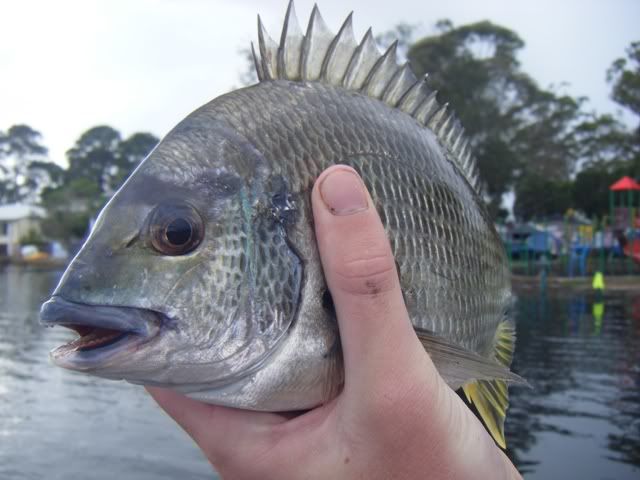
Because of this also, you can find great fish in overlooked, or 'fishless' waters. If there's food there; small baitfish; small marine-life; human waste (not just referring to half eaten paddle-pops here!), it is well worth throwing a line in. If you suspect the latter food source is present, washing your reel down is heavily advisable.
Bream can prove to be an aggressive, but at times 'finicky' feeding species. As such, they are targeted often on artificial lures that either mimic what they're eating, or simply give them a shock to get a reaction bite.
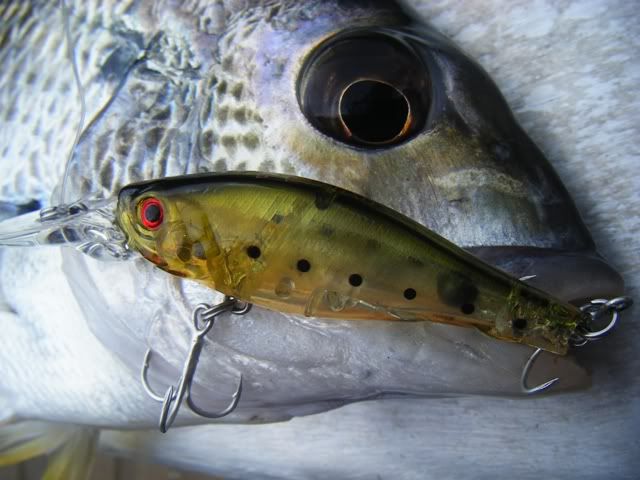 |
| An average sized bream taken on a Bassday Kangoku Shad |
Regardless of rules you've read about or come up with based on experience, fishing can always turn it all upside down. So in saying that, it pays to have a variety of lures to cover not only all water columns but to also mimic a vast array of bream food. Occasionally you can abandon your tried and tested 'gun' lures, perhaps by imparting a different action, changing lure colour, or simply by throwing it somewhere stupid and you could find yourself jawdropped as you start getting smashed by nice fish.
For most fish, I find it's best to concentrate your efforts towards to a tide, weather or daylight change. Such are times when in general, most critters will feed most actively.
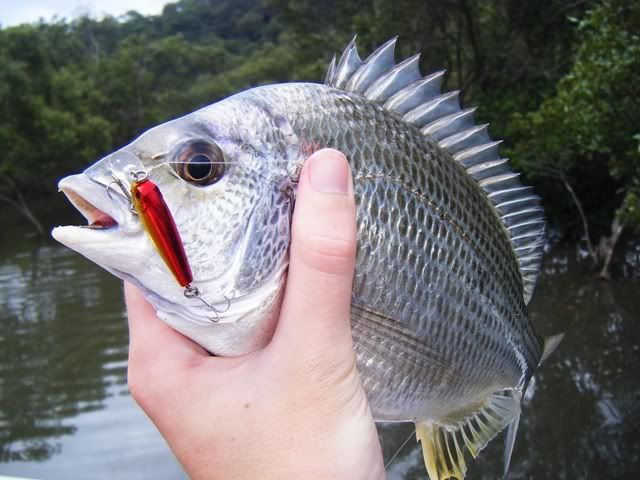 |
| Fishing divers like this gets expensive, as they tend to 'dive' into the mangrove chutes, never to return. |
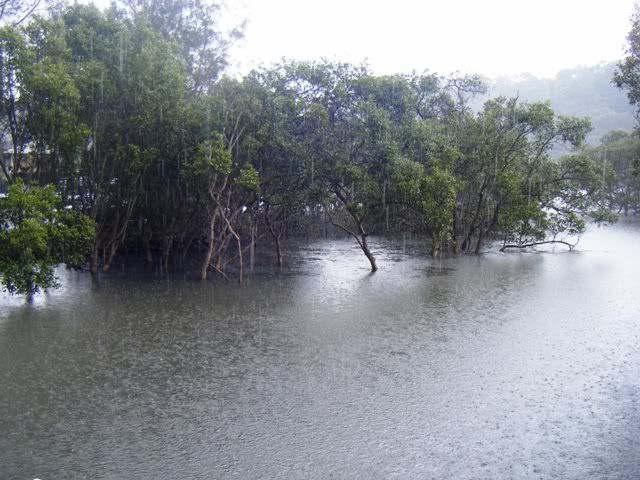 |
| I've had some great sessions in bad weather |
I, myself only fish for bream in two sorts of environments. These are the only applications I find enjoyable enough to forgo chasing other species I more heavily enjoy fishing for. When in open waters, bream are not particularly exciting to catch, but in tight structure.. well it's quite the opposite!
Both applications require complete attention, relatively strong tackle (compared to the spiderweb some people use) and confidence to stick it to the fish. Bream will more often than not pull hardest in their first struggle, which for me will be usually be in some hairy territory. If any of these factors are lacking, you can find your bank balance will decline, decline and decline. Good lures are often expensive and the big bream surely have their collections.
The first environment I enjoy bream fishing the most, is within mangroves. Organic 'chutes', oyster encrusted rocks and protruding trees are just some of the obstacles the resident bream like to weave throughout, in their attempts to get your painful piece of food out of their mouth.
Often the water I'm prospecting at the middle of a tide ranges from not being there at all, to a meter odd.
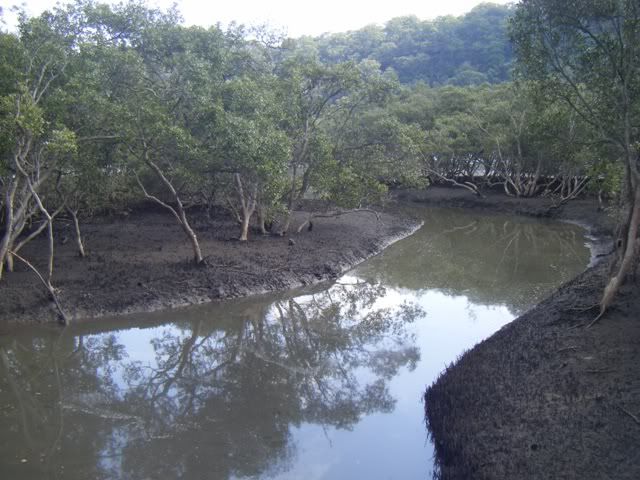 |
| A fish-holding channel at low tide |
In these situations, through emptying half a week's pay on Japanese hardbodied divers, I've decided are best worked with unweighted soft-plastics, more for my sake than the fish's dining preference.
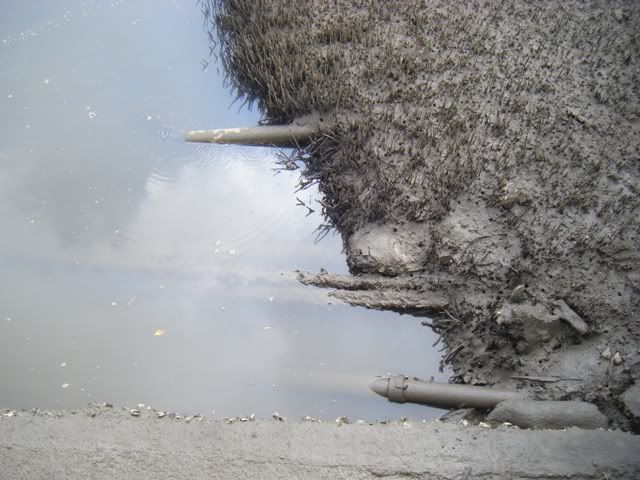 |
| Some gnarly structure here |
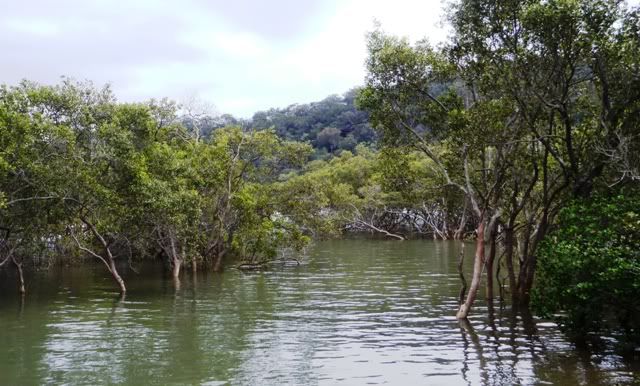 |
| The same spot at high tide |
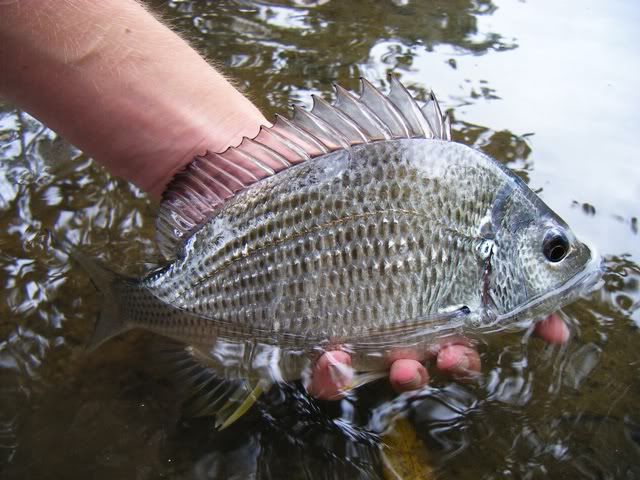 |
| An average sized bream ready to swim |
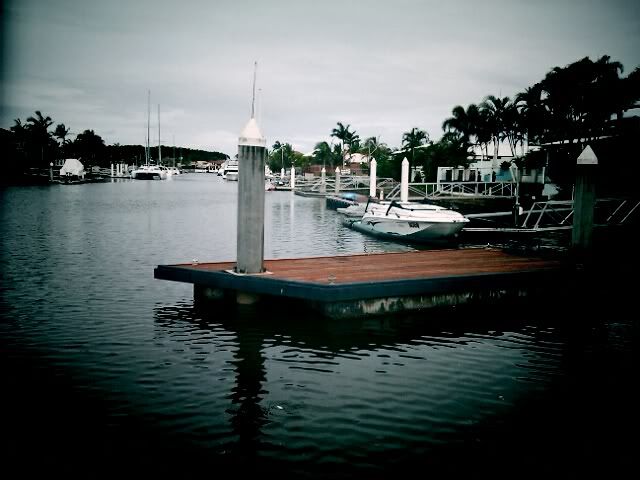 |
| You wish you were there, don't you. |
Small 'vibes' that flutter on the drop, or vibrate well on the lift have proven most successful for myself. I've had most success casting next to or on to the actual pontoon, and letting it drop down along the pylons or below the platform. If it's not being picked up while I'm freespooling it down, I will try various retrieves and stick with what's firing.
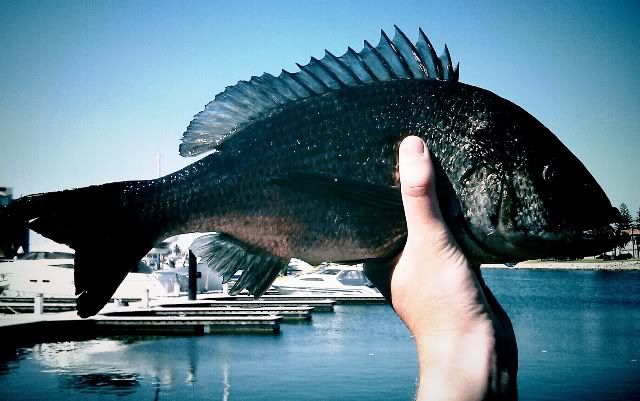 |
| This was taken from under a pontoon on a micro-vibe |
As within mangroves, I find it's best to set the drag close to an honest 800gm. This is enough to bully the kilo+ models, but light to give just that little bit of leeway during a run, provided you point the rod more towards the fish (a bit of load in the rod is still necessary in my opinion). Once you have the fish heading out to open waters, feel free to go easier and loosen the drag a bit.
You'll be surprised how much stick you can give the fish if you are paying attention to its movements and accommodate load pressure accordingly, but that's something you learn by feel, not off the internet.
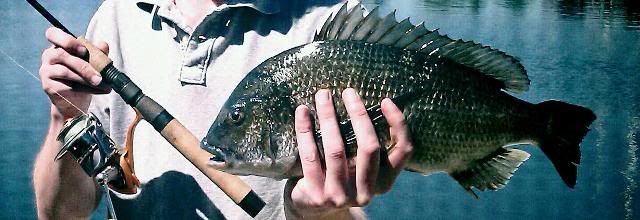 |
| A real brute of a bream, pulled from a pontoon. These fish will really test you. |
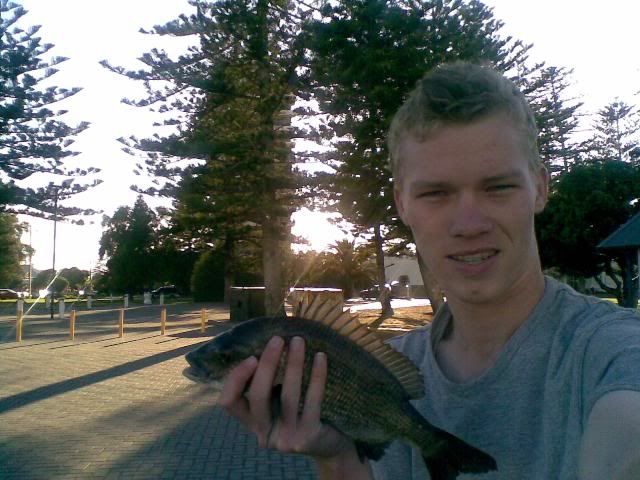
So, in conclusion, bream can prove to be an exciting sports-fish in their own territories. I personally release all my bream not only for conservation (not terribly pressing for such a species) but also to the simple fact I don't like the taste of the fish in the areas I fish. It is not a crime to kill a fish for a feed if you are that way inclined, but as with all things, moderation is key (especially if fishing polluted waterways).
Tight lines,
David Hajdu.